NSG Ads Vietnam
Play video

NSG Ads Vietnam

IMPACT WHERE IT MATTERS –WE GET YOU POSITION WHERE IT MATTERS
Our OOH media reaches 7 out of 10 Vietnamese monthly.* That’s one big audience— and a lot of little ones too.

Our Solutions

AIRPORT

AIRPORT

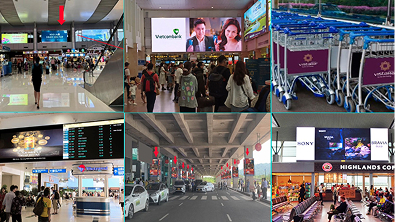
Airport advertising is a premium form of Out-of-Home (OOH) marketing that targets a captive, high-income audience during periods of extended dwell time. With travelers spending an average of 2.5 hours in the terminal—significantly higher than other transit hubs—brands have a unique opportunity for deep engagement and storytelling.
Connect with diverse and desirable audiences at every step of their journey throughout airports. Influence a premium and receptive audience, delivering first and last brand impressions reaching passengers, commuters, airport workers, and meeters-and-greeters alike.

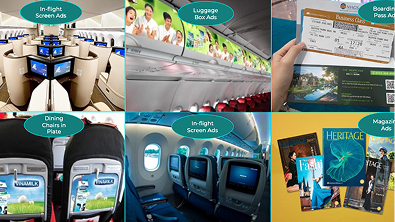
Popular Airport Ad Formats:
Advertisers can strategically place messages along the entire passenger journey from check-in to arrival:
Large Format Spectaculars: Enormous, often backlit displays placed in high-traffic zones like main concourses and walkways to create unmissable ""wow"" moments.
Digital Display Networks: LED and LCD screens that rotate dynamic content, often found in baggage claims or gate lounges.
Dioramas & Backlit Displays: Static, high-resolution light boxes that provide 100% share of voice for a single brand throughout terminals.
Journey-Path Media: Ads that travelers cannot avoid, such as those on jet bridges, escalator wraps, and terminal walkways.
Experiential Activations: Immersive setups like branded selfie stations, pop-up stores, or product demo kiosks that allow for direct hands-on engagement.
Utility Sponsorships: Branding essential passenger amenities like free Wi-Fi portals, charging stations, or airport lounges

Why It Works: Audience & Impact:
Airport environments offer specific advantages that few other channels can match:
Affluent Demographics: Frequent flyers are 2.2x more likely to be C-suite executives and twice as likely to influence over in business spending.
High Receptivity: 83% of frequent flyers notice airport ads, and 3 out of 4 associate them with high-quality, prestigious brands.
Emotional State: Travelers are often in a positive, discovery-oriented mindset while embarking on trips, making them more open to new brands and products.
Direct Action: Approximately 40 to 57% of travelers take action after seeing an airport ad, such as visiting a website or scanning a QR code
Billboard

Billboard

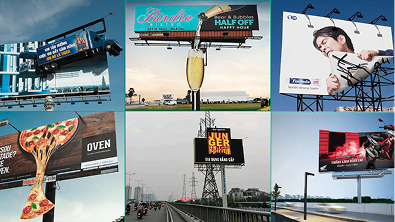
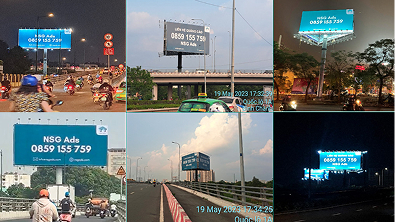
Billboard ads are large-scale prints ads that promote a company, product, service, or campaign. They are typically placed in high-traffic areas, such as along highways and in cities.
Pros: captivate your audience, commuters can see them every day, reach a larger audience, good billboards help reach the target audience, billboards are one of the most effective forms of advertising. Advertisers choose between several formats based on their budget and campaign goals and locations, billboards aim to build brand awareness through bold visuals and brief, punchy messaging, these are traditional, printed vinyl and hilfex displays stretched over a frame. They offer exclusive, 24/7 exposure for a single advertiser and are highly cost-effective for long-term branding, a static billboard gives you 100% share of voice.
some of the main advanagtages are as follows:
Constant Exposure: Your message never ""turns off"" or rotates out of view
Reliability: There are zero technical components. You don't have to worry about software glitches, power outages, or dead LED pixels.
Exclusivity: You ""own"" that physical space. There is no risk of your ad appearing right after a competitor's, as can happen in digital rotations."
Bus-taxi-car advertising

Bus-taxi-car advertising

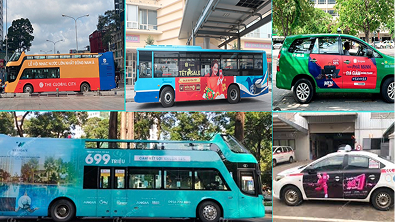
Bus and taxi advertising are high-impact forms of transit out-of-home (OOH) media that leverage moving vehicles to reach diverse urban audiences. While similar in purpose, they offer distinct advantages in reach and targeting.
Bus Advertising: The ""Moving Billboard""
Buses follow fixed, predictable routes, making them ideal for targeting specific neighborhoods or commuter paths,
Exterior Formats:
Full Wraps: Covers the entire bus for maximum brand dominance.
Kings, Queens, & Supersides: Large posters on the street or curbside at eye level.


Bus Rears (Tails): Targets drivers and passengers in following traffic.

Interior Formats:
Panels & Coves: Reaches a captive audience of riders with longer dwell times (often up to 30–45 minutes).
Bus TV: Digital screens showing entertaining content mixed with ads.

Taxi Advertising: Hyper-Mobile Reach,taxis lack fixed routes, allowing your brand to move freely through high-traffic business districts, shopping hubs, and nightlife areas.
Rooftop Displays:
Static Taxi Tops: Backlit signs that remain illuminated 24/7.
Digital Taxi Tops (LED): High-resolution screens that can rotate multiple ads and use GPS triggers to show specific messages in different neighborhoods.

Body Placements:
Full Wraps & Door Panels: Transforms the vehicle into a mobile brand ambassador.
Trunk/Rear Ads: Positioned specifically for following motorists and pedestrians.
Passenger Engagement:
Taxi TV / Seatback Tablets: Interactive digital screens for passengers, often featuring video ads or QR codes for immediate action.
Creative Billboard

Creative Billboard

Creative billboard advertising transcends standard signage by using physical space, surroundings, and innovative technology to create a memorable impact. In an environment where drivers have roughly three seconds to process an ad, creativity is essential for high brand recall.
Innovative Design Techniques:
3D Extensions & Props: This involves adding physical elements that ""spill over"" the edges of the billboard frame. Examples include a giant snorkel mask breaking the surface or animatronic giant eggs that appear to hatch.
Environmental Integration: Some of the most clever ads interact with their physical surroundings. For instance, using the movement of the sun to create ""shadow play"" or aligning visuals with landmarks like the Delhi Metro to show ""advertising in motion"".
Minimalist & Negative Space: Experts often suggest that ""silence speaks louder than words"". Using massive amounts of negative space focuses the viewer's eye on a single, powerful image or a short, punchy message of seven words or fewer.
3D Anamorphic Displays: A major trend in Digital Out-of-Home (DOOH), these use perspective to make images appear as if they are lunging out at pedestrians, a common sight in high-traffic zones like Times Square.
These creative billboards can be with the Engagement Features for examples:
Interactive Elements: Some campaigns use QR codes or promo codes to bridge the gap between offline and digital. More tactile examples include billboards covered in detachable pennies or chocolate for the public to take.
Topical Humor: Brands like Amul use billboards to comment on current events in real-time, creating a witty connection that encourages social sharing.
User-Generated Content (UGC): Apple's ""Shot on iPhone"" campaign turned thousands of billboards into a global art gallery using customer photos, proving that high-quality visuals often beat sales copy.
LARGE FORMATS & HORADINGS

LARGE FORMATS & HORADINGS

Out-of-home (OOH) advertising features several ""very large"" formats that exceed the dimensions of standard highway billboards. These are designed for maximum visibility in high-traffic urban centers or along major interstates.
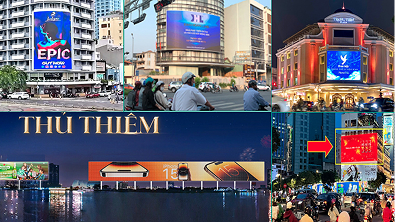
Wallscapes are among the largest OOH formats available. They are advertisements attached to or painted directly onto the exterior walls of buildings in busy metropolitan areas,
Size: They can range from large format to full building coverage.
Impact: Because they are custom-fit to the architecture, they can bypass standard zoning restrictions that limit regular billboards, often becoming local landmarks.
Spectaculars:
As the name suggests, Spectaculars are larger-than-life displays, often equating to the size of several standard billboards combined.
Size: Standard spectaculars often start over 200m2 and can be much larger.
Features: They typically feature elaborate enhancements like neon lighting, 3D anamorphic displays, and moving parts to capture maximum attention in premium locations
Large Bulletins:
While bulletins are a ""standard"" format, the largest versions are specifically designed for major expressways
Non-Traditional Large Formats
Building Wraps: A type of massive wallscape where the entire facade of a skyscraper is covered in mesh PVC material.
Aerial Advertising: Blimps and aircraft towing massive banners can reach thousands of people at once over beaches or sporting events.
Projections: High-powered projectors can turn the side of a stadium or office tower into a temporary, enormous digital display

Hoardings: In the context of ""very large"" formats, hoarding refers to massive, eye-level advertising panels typically used to secure and brand large-scale environments like construction sites, stadiums, or vast roadside stretches.
While ""hoarding"" and ""billboard"" are often used interchangeable, hoardings are distinct because they often serve as physical barriers while providing an expansive, continuous canvas for detailed storytelling
Common Large Hoarding Formats are as follows:
Construction Hoardings: Large-scale panels (often made of timber or metal) erected around building sites. These can span hundreds of feet, effectively turning a city block into a brand's narrative.
Stadium/Perimeter Hoardings: Continuous displays surrounding sports pitches.
Highway Hoardings: Large iron structures placed on rooftops or alongside busy highways. These often utilize standard large sizes but can be customized based on municipal permissions
The size and dimensions are unlike billboards with rigid standards, hoarding sizes vary based on the physical space they are protecting or the structure they are mounted upon.
LED

LED

LED screens, or Digital Out-Of-Home (DOOH) displays, have become the modern standard for high-impact outdoor advertising. Unlike traditional static boards, these screens use light-emitting diodes to produce vivid, high-brightness content that remains clear even under direct sunlight.
LED raise up the sense of reality and trust of all advertisements. It is a great selling tool for advertisers to have direct interaction with clients. It provides a quick and easy mean for all businesses to accelerate and increase their sales revenue through direct digital advertising and customer engagement promotional campaign.

Key Advantages over Static Formats:
Dynamic Content: You can run videos, animations, and rotating ads, which capture 4–6 times more attention than static posters.
Flexibility & Real-Time Updates: Advertisements can be changed instantly via Wi-Fior software and hardware integration. This allows for time-sensitive promotions, such as a restaurant showing coffee deals in the morning and happy hour offers in the evening.
Cost-Efficiency: While initial installation is high, they eliminate recurring printing and manual labor costs for every new campaign.
Higher ROI: Because one screen can rotate 10 to 16 different advertisers simultaneously, media owners see higher revenue, while brands benefit from high recall rates—up to 89% of travelers remember seeing at least one digital.

Notable LED Ad Formats
3D Anamorphic Billboards: These use ""forced perspective"" to create stunning illusions of depth, making objects appear to leap off the screen. These often become viral landmarks in high-traffic spots like Times Square or Tokyo.
LED Video Walls: Large-scale modular systems often found on building facades, in stadiums for live scores, or in shopping malls to influence purchase decisions at the point of sale.
Transportation Hubs: Screens in airports, train stations, and bus terminals target a captive audience during long dwell times
SHOPPING MALLS INDOOR OUTDOOR

SHOPPING MALLS INDOOR OUTDOOR

Shopping mall advertising is a form of out-of-home advertising. It can be a good way to reach audiences who are ready to buy and penetrate local communities. Billboards: Large billboards in parking lots can encourage consumers to take action. Flashing billboards that repeat throughout the day can also be effective. LED screens: These digital advertising spaces can be placed inside and outside of retailers and updated easily. Elevator, escalator, and window graphics.
ELEVATOR TV & DIGITAL SCREENS

ELEVATOR TV & DIGITAL SCREENS

Elevator digital advertising is a high-impact Digital Out-of-Home (DOOH) medium that targets high-value audiences during ""dead time""—brief periods where passengers have limited distractions. Unlike traditional TV or online ads, these cannot be skipped or turned off, leading to recall rates that often surpass traditional media.

Key Ad Formats:
LCD Screens: Large digital displays usually mounted in elevator lobbies or ground floors. They often mix advertising with high-interest content like weather, news, and building updates to maintain viewer engagement.
Digital Frames: Smaller screens placed directly inside the elevator cabin at eye level. These typically run on a loop of 10–30 second spots.
Interactive Screens: Advanced touch-enabled displays that allow passengers to engage with surveys, product catalogs, or local services.

Targeting by Building Type, advertisers select buildings based on the demographic profile of the people living or working there:
Office Buildings:
Demographic: High-income professionals and business decision-makers.
Ad Relevance: B2B services, professional software, high-end gadgets, and lunch-time food delivery or local cafes.
Operational Hours: Typically active during business hours (e.g., 7 AM – 7 PM).
Apartment/Residential Complexes:
Demographic: Middle-to-upper-class families and young urban professionals.
Ad Relevance: Home services, e-commerce, household goods, insurance, and neighborhood retail promotions.
Operational Hours: Extended runtimes to capture residents coming home late (e.g., 7 AM – 9 PM)
SHOPPING MALL advertising

SHOPPING MALL advertising

Advertising in shopping centers and malls is a powerful form of place-based out-of-home (OOH) marketing that reaches consumers when they are in a high-intent, ""shopping mindset"". Unlike billboards that target commuters on the go, mall ads engage a captive audience with an average dwell time of 30 to 123 minutes.

Popular Ad Formats, malls offer a mix of high-impact digital and physical touchpoints:
Digital Screens & Networks:
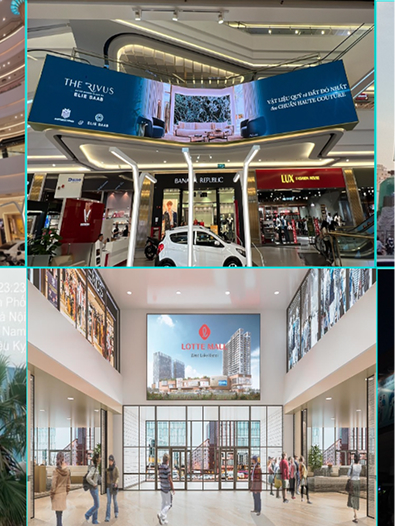
Large-Format LED Walls: High-resolution video screens often found in main atriums or central plazas for maximum impact.
Digital Standees & Kiosks: Eye-level screens throughout walkways that often double as wayfinding directories.

Physical Wraps & Banners:
Sky Banners: Massive vertical banners hanging from the ceiling that are visible from multiple floors.
Elevator & Escalator Wraps: Bold graphics applied to moving surfaces that capture attention during transition periods.

Specialty Placements:
Food Court Advertising: Static table-top ads or digital networks that reach people in a relaxed, communal setting.
Floor Decals: Strategic graphics on the ground that lead shoppers directly to a specific storefront.
Experiential Pop-Ups: Dedicated event spaces where brands can set up temporary booths for product sampling or live demonstrations

Key Strategic Benefits:
Proximity to Purchase: You can place an ad mere steps away from your actual store, effectively ""hijacking"" footfall from high-traffic areas.
High Recall: Repeated exposure throughout a single visit significantly boosts brand recognition; research indicates recall rates can be up to 30% higher than other mediums.
Targeting by Demographics: Brands can select specific malls based on the audience they attract (e.g., premium luxury centers vs. family-oriented regional hubs).
Impulse Buying: Statistics suggest that 85% of customers are more likely to make an unplanned purchase after seeing an ad in a mall environmen
WALL-MOUNTED PANO advertising

WALL-MOUNTED PANO advertising

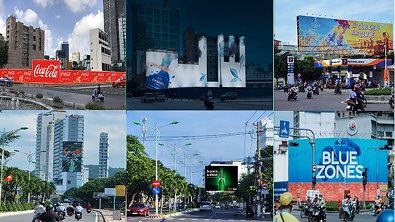
Wall-mounted pano advertising (often simply called Panos) consists of large-format displays or banners attached directly to the facades, sides, or fronts of high-rise buildings and skyscrapers. Unlike traditional billboards that require a dedicated pillar and land space, panos leverage existing architectural structures to dominate urban landscapes,
Core Formats & Technology:
Static Panos: Large vinyl or Hiflex tarpaulin sheets stretched over a simplified metal frame attached to a wall. These are durable and weather-resistant for long-term campaigns.
Digital Wall Displays: High-definition LED or LCD screens that allow for dynamic video, animations, and real-time content updates.
3D/Anamorphic Billboards: Specialized digital panos that use ""forced perspective"" to create 3D optical illusions, often used on building corners in busy districts.

Strategic Benefits:
Urban Efficiency: They ""save urban land space"" by utilizing vertical surfaces, making them one of the few ways to get massive advertisements into densely populated city centers where free land is unavailable.
High Visibility: Positioned at a higher elevation on buildings, they offer better visual effects and can be seen by large crowds of pedestrians and motorists from a distance.
Space Value: Wall-mounting eliminates floor occupation, making it ideal for narrow corridors, building lobbies, or supermarket aisles
LED TOWER MAPPING advertising

LED TOWER MAPPING advertising

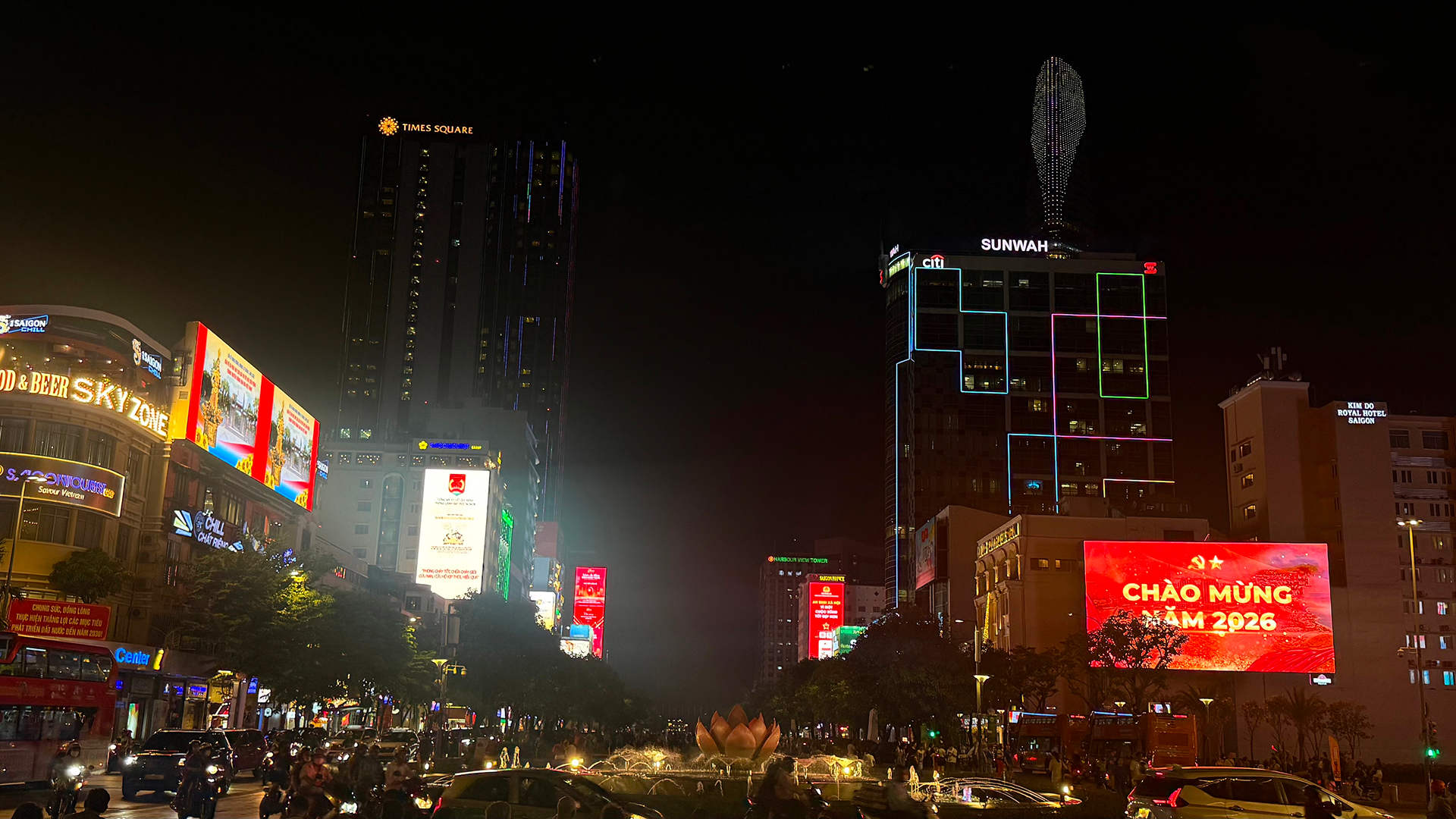
LED Tower Mapping (often referred to as Facade Mapping or Media Facades) is the ultimate form of ""architectural branding."" It involves turning an entire skyscraper or landmark tower into a giant digital screen using specialized LED technology or high-powered projection.
Unlike a standard flat screen, this ""wraps"" the building's unique geometry, making the architecture itself the medium.

Implementation Methods, There are two primary ways to turn a tower into an ad:
LED Mesh/Strips: Thousands of LED nodes or ""curtains"" are attached to the building's exterior. This is common for permanent installations (like the Burj Khalifa or Salesforce Tower) because the mesh is transparent from the inside, allowing residents to still see out the windows.
Projection Mapping: High-lumen industrial projectors are used to ""map"" light onto the building's surface. This is typically used for temporary events, product launches, or ""guerrilla"" marketing because it doesn't require permanent hardware on the building.

Key Strategic Benefits:
City-Scale Dominance: These displays often become the focal point of a city's skyline, visible from miles away.
Social Media ""Viral"" Factor: Because of the sheer scale and visual ""wow"" factor, these ads are frequently filmed and shared on TikTok, Instagram, and LinkedIn, providing massive earned media value.
Anamorphic (3D) Effects: Advanced mapping allows for 3D illusions where objects appear to fly out of the building or the tower appears to ""collapse"" and rebuild itself.
Symbolism: Advertising on a landmark tower associates a brand with prestige, power, and market leadership.
CONVENIENCE STORE advertising

CONVENIENCE STORE advertising

Convenience store (C-store) advertising is a high-frequency Digital Out-of-Home (DOOH) and point-of-sale medium that reaches consumers during daily essentials runs. Because these trips are often unplanned, ads here are highly effective at triggering impulse purchases just seconds before a transaction.

Key Ad Formats, Advertisers use multiple touchpoints to engage shoppers from the pump to the counter:
Digital Screens: High-definition vertical screens often placed at eye level near entrances or checkout counters. These allow for dynamic content that can change based on the time of day (e.g., coffee in the morning, snacks at night).
Shelf Talkers & Cooler Wraps: Custom vinyl wraps on beverage coolers and small signage on shelves that place brands directly where purchase decisions happen.
Audio Advertising: In-store audio networks, broadcast professionally produced ads and music tailored to the store's demographic.
Experiential Sampling: Temporary stations or brand ambassadors handing out samples of new drinks or snacks to lower the barrier to purchase

Strategic Benefits:
Hyper-Local Reach: C-stores serve as neighborhood hubs, making them ideal for targeting specific communities or commuter zones.
High Intent: Consumers are already in a ""buying mode,"" leading to higher conversion rates for products like beverages, snacks, and personal care items.
Constant Exposure: With many stores operating 24/7, brands stay visible to diverse demographics at any hour
METRO TRAIN advertising

METRO TRAIN advertising

Metro train advertising is a high-visibility transit Out-of-Home (OOH) medium that captures a diverse urban audience, including professionals, students, and tourists. Because commuters often have a high dwell time (averaging 6–10 minutes on platforms and 20–40 minutes inside trains), these ads achieve significant brand recall.

Core Advertising Formats, Advertisers utilize multiple touchpoints throughout the commuter's journey:
Train Exteriors (Wraps):
Full Train Wraps: Completely covering the exterior, transforming the train into a ""moving billboard"" visible to both passengers and pedestrians.
Train Interiors:
Panels & Coves: High-visibility posters located above seats or on bulkhead walls near doors.
Digital Screens: High-definition LEDs displaying dynamic video content, often mixed with real-time transit updates.
Ambient Placements: Branding on grab handles, seatbacks, and even train floors.
Station & Platform:
Platform Screen Doors (PSDs): Ads placed on the glass barriers where passengers wait to board.
Station Takeovers: An exclusive branding of an entire station, including floor graphics, staircase wraps, and pillar branding, to ensure zero competition.
Tunnel Projections: Motion-synced ads that project onto tunnel walls, visible only to passengers looking out train windows between stations.

Strategic Benefits:
Captive Audience: Unlike digital ads, metro ads cannot be skipped or blocked; passengers often interact with them to pass the time.
Hyper-Targeting: Brands can target specific lines based on the area's demographics—such as business districts for B2B services or university lines for youth-oriented products.
High Frequency: Daily commuters encounter the same message twice a day, which is critical for building long-term brand trust and recognition
PEDESTRIAN BRIDGE advertising

PEDESTRIAN BRIDGE advertising

Pedestrian bridge advertising, often called Bridge Banners or Overpass Billboards, places ads directly in the line of sight of motorists and pedestrians. Because these ads are centered over traffic lanes, they are nearly impossible to miss and offer high brand recall due to repeated exposure.

Core Advertising Formats:
Static Banners: Large-format vinyl or mesh tarps stretched across the bridge railing.
Illuminated Box Signs: Backlit panels that provide 24/7 visibility, often integrated into the bridge structure.

Key Strategic Benefits:
Direct Line of Sight: Unlike roadside billboards at the edges of the street, bridge ads sit directly in front of traffic, making them highly impactful.
Unblockable Visibility: They cannot be skipped or muted, providing continuous visibility to a massive daily audience.
Traffic Congestion Advantage: In cities with frequent traffic jams, long dwell times allow drivers more time to perceive and remember the message.
Localized Impact: Ideal for promoting local businesses, real estate launches, or events near high-traffic hubs like malls or business districts.

Regulations and Constraints, To ensure public safety and urban aesthetics, strict rules typically apply:
Safety Corridors: Ads must not obstruct traffic signals, road signs, or the driver's view of the road.
Structural Integrity: The bridge must have sufficient load-bearing capacity for the board and its mounting.

BENEFITS OF OOH

REACHES PEOPLE

OOH media formats surround and reach consumers during the 70 percent of their day spent away from home. As people go out and about, commuting or shopping or walking their dog or searching for their favorite frappe, they are exposed to OOH messages.

HIGHLY TARGETED

Out-of-home placements are location-specific. Each location is strategically selected to aim your message at the precise audience you’re trying to engage.

WELL PERCEIVED

More so than other forms of advertising, when people consume OOH messages, they feel confident, excited, hopeful, positive and happy. Consumers trust out-of-home. Next to print, people perceive OOH as a very credible source of information.

ALLOWS CREATIVE IMPACT

Size does matter when you’re cutting through the clutter of our everyday environments. You have greater control over where your brand is placed, contextually speaking. With digital or print, you may end up published alongside offensive content that can damage your brand without you having full control over that placement

DRIVES ONLINE ENGAGE

One of the biggest benefits of OOH media in today’s marketing mix is its ability to amplify other media channels. When more OOH is allocated to the overall marketing mix, magic starts to happen. No fairy godmother required. OOH is quite the verifiable, effective marketing.

CONTINUES TO INNOVATE

Our industry is also growing due to programmatic benefits of having digital creative in the OOH environment. This allows for dynamic creative and quick ad changes. The DOOH industry is still in its infancy, and as we learn from the pioneering efforts, we’ll adopt even better digital OOH displays in the future.

Trusted By